


WELCOME
to the blog
FEATURED POSts
Read Our Blog
Form is found when space is made functional.
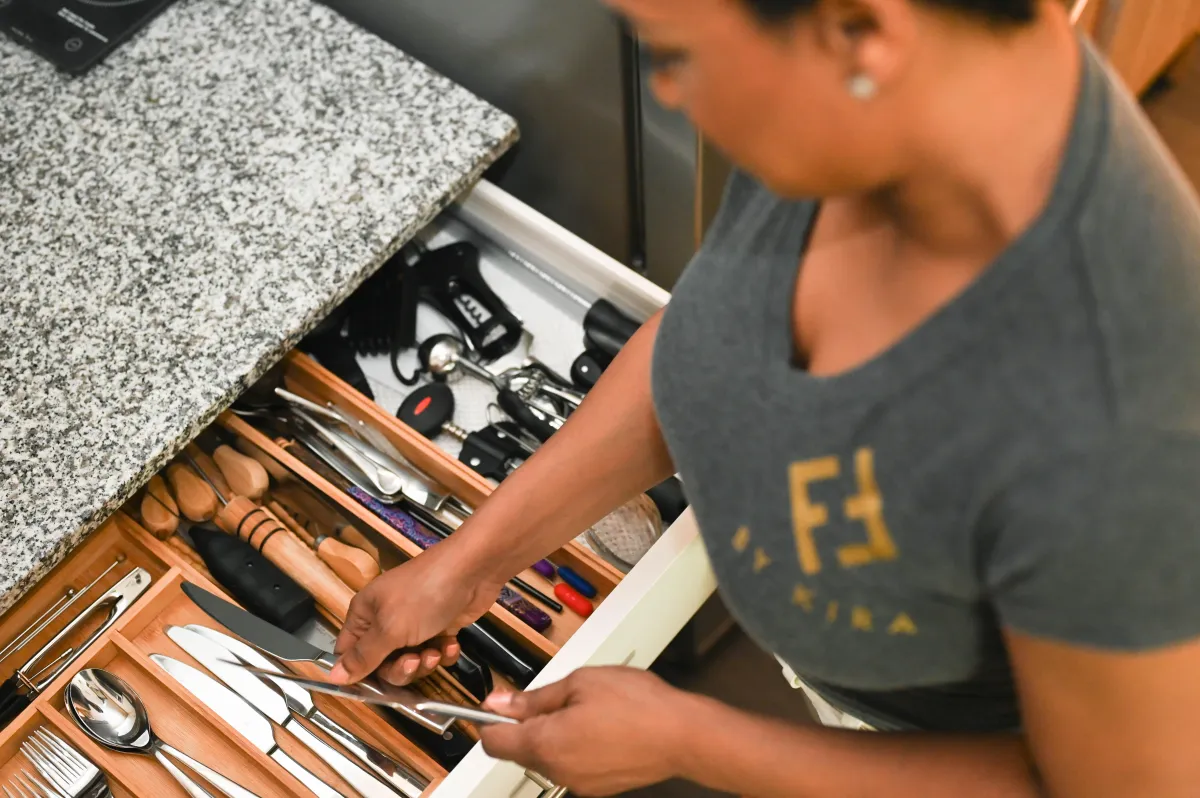
Before You Organize, You Need to Declutter
The truth about creating an organized home: sometimes the problem isn’t the organization. It’s the stuff.
After years of helping people organize their homes, I’ve been thinking a lot about something that I see over and over again: we have too much stuff.
And I don’t say that from a place of judgment. I say it as someone who is also guilty of accumulating things.
We buy things because we need them. Because they’re on sale. Because they’re beautiful. Because they might come in handy someday. Because we’re preparing for a new season of life. Because we want to make our homes feel better.
And then little by little those things become a lot of things.
Before long, the drawers are full, the closets are overflowing, the cabinets are difficult to close and every new item requires us to find somewhere else to put something.
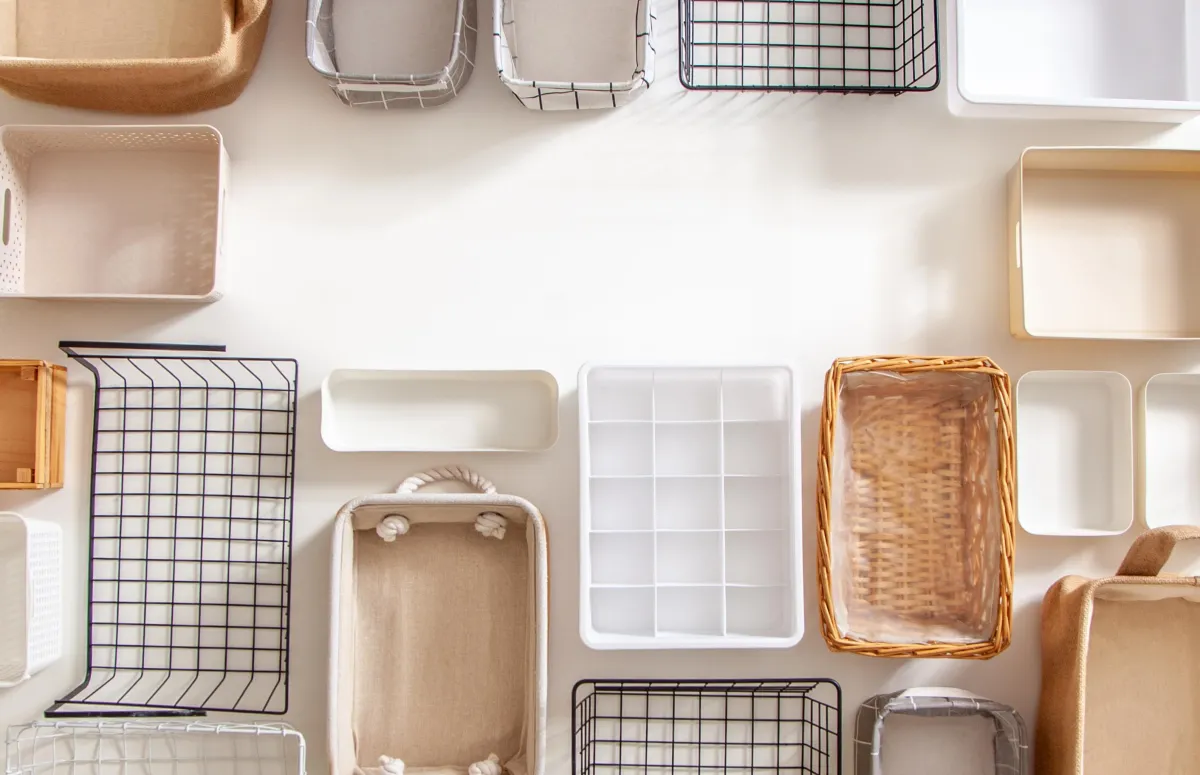
So we buy another bin.
Another basket.
Another shelf.
Another storage cabinet.
But here’s the problem:
Storage can never keep up with unlimited accumulation.
So Why Is It So Hard to Let Things Go?
Knowing that we have too much stuff is one thing.
Actually getting rid of it is another.
Over the years, I’ve noticed three common blocks that make decluttering difficult.
1. “I Might Need It Someday.”
This is probably one of the most common reasons people hold onto things.
What if I need it?
What if I lose weight?
What if I need to dress up?
What if my kids need it?
What if I suddenly start using that kitchen appliance?
The problem with “someday” is that it has no expiration date.
So items can sit in our homes for years simply because we are preparing for a possibility that may never happen.
Try this instead: Ask yourself, “If I didn’t already own this, would I spend money to buy it today?”
If the answer is no, that tells you something.
You don't need to predict every possible future scenario. You simply need to decide whether the item is useful to your life now.
And if you genuinely need it someday? You can often replace it when that day actually arrives.
2. “But I Paid Good Money for It.”
This one can be especially difficult.
Getting rid of something we spent money on can feel like admitting that we made a bad decision.
But keeping something you don't use doesn't recover the money you spent.
The money is already gone.
What you can decide is whether you're going to continue paying for that purchase with your space, your time and your mental energy.
That expensive dress sitting unworn in your closet isn't giving you your money back.
Neither is the unopened product in your bathroom cabinet.
Neither is the appliance taking up valuable kitchen real estate.
Sometimes the most useful thing you can do with a purchase that didn't work out is learn from it and let it go.
3. “It Has Sentimental Value.”
This is where decluttering can become emotional.
We don't just keep objects. We keep memories.
A child's artwork. A gift from someone special. Something that belonged to a parent or grandparent. Souvenirs from a trip. Clothes connected to a particular stage of life.
And sentimental items deserve a different approach.
The goal isn't to become ruthless and throw everything away.
The goal is to separate the memory from the volume of objects you're using to represent it.
You don't have to keep every item to honour the person, experience or memory associated with it.
Choose the pieces that genuinely mean something to you.
Take a photograph of something before letting it go.
Create a small, intentional memory box.
Display the things you love rather than allowing them to disappear into a basement bin.
Sentimental doesn't have to mean everything.
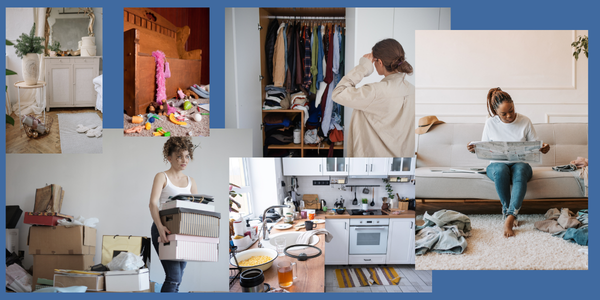
Decluttering Isn't About Having Less. It's About Making Room.
This is the part I think we sometimes miss.
Decluttering isn't about creating a perfectly minimal home.
It's about creating a home that can comfortably hold the life you're actually living.
When you remove the things you don't need, use or love, everything else has somewhere to go.
Your favourite clothes can breathe in your closet.
The things you use every day become easier to reach.
Your kitchen becomes easier to clean.
Your bathroom becomes easier to maintain.
And your home starts working with you instead of constantly demanding something from you.
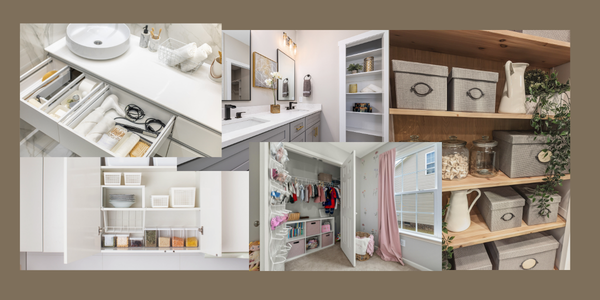
September Is the Perfect Time to Reset
September has always felt like a fresh start to me.
The slower pace of summer gives way to routines, schedules, school, work and a new season.
But September is also the beginning of another period of accumulation.
New school supplies.
New shoes.
New clothes.
Sports equipment.
Backpacks.
Lunch containers.
Sweaters.
Jackets.
Boots.
Cold-weather gear.
And because our children grow, their bodies change and needs evolve, sometimes we genuinely do need new things.
But before you bring the new things into your home, take a look at what is already there.
Does last year's winter coat still fit?
Do your children actually need another five sweaters?
How many travel mugs does your kitchen realistically need?
Are you using all of those skincare products?
Is your closet holding clothes for a version of yourself that no longer exists?
Before you make room for the new season, make room in your home.
Because every new item needs somewhere to live.
And if there isn't space, something else eventually gets pushed aside, stuffed into a drawer, piled on a surface or forgotten in a closet.
That's how clutter begins again.
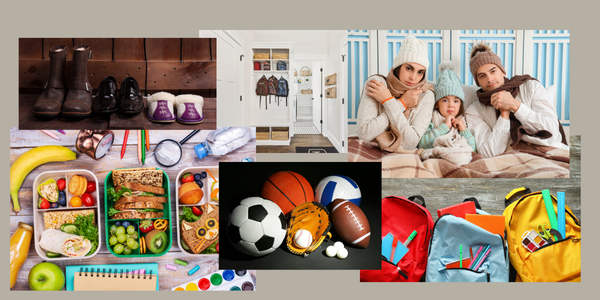
The Goal Isn't an Empty Home.
It's a home with enough space for the things that matter.
After years of organizing, I've learned that the most successful organizing projects aren't necessarily the ones with the prettiest containers.
They're the homes where the client has made thoughtful decisions about what deserves to stay.
Once you've reduced the volume, organization becomes so much easier.
You need fewer containers.
You can actually see what you own.
You can put things away without playing a daily game of Tetris.
And, most importantly, you can maintain it.
That's the real goal.
Not just getting organized but creating a home that is realistic to maintain as life continues to change.
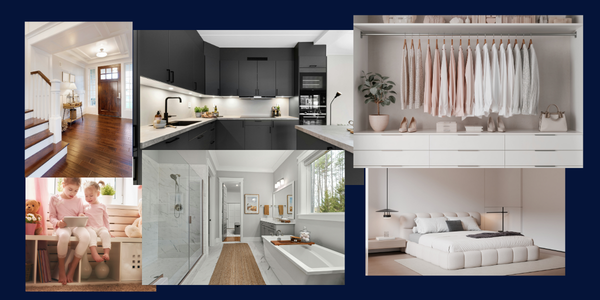
Ready to Make Room for What's Next?
If you've been looking around your home and realizing that the issue isn't that you need more storage, you need less stuff September is a great time to start.
Whether it's your closet, kitchen, bathroom, basement, children's spaces or your entire home, I'm here to help you make thoughtful decisions about what stays, what goes and how to create systems that actually work for your life.
If you're ready to make room for the new season—and everything that comes with it—let's talk.
Book a consultation with me and let's create a home that has room for the life you're living now.
Because sometimes, getting organized doesn't start with finding a place for everything.
Be Well,
Kira
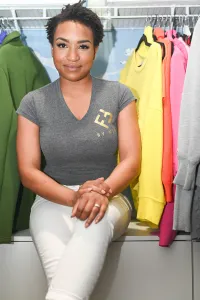
BOOK YOUR FREE CONSULTATION TODAY
Want to know more about the services provided by Kira? Fill out the form below or give me a call; I can't wait to hear from you!
Get the Checklist
GUIDE TO PURCHASING ORGANIZING PRODUCTS
Form and Function by Kira is a top professional organizer in the Ajax, ON professional organizers directory on FindMyOrganizer.com.Greater Toronto kira@formandfunctionbykira.com
©2023 by Form and Function by Kira | privacy policy | terms & conditions